Developing Low-Cost Non-Invasive Circadian Parameters Monitor
Continuous and Remote Lifestyle and Health Monitoring
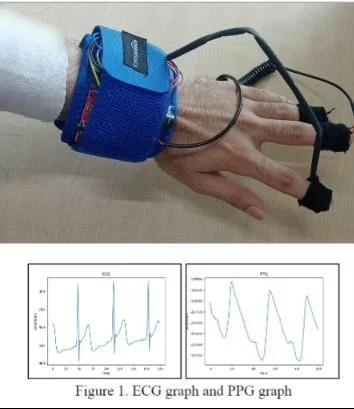
About the Technology
Circadian rhythm disruptions are closely linked to sleep disorders, cardiovascular issues, and metabolic syndromes. Monitoring these circadian parameters is usually expensive and requires hospital grade polysomnography setups.
This research project introduces a low-cost, non-invasive wrist-worn device designed to track circadian rhythm parameters continuously in 24x7 real-world conditions. Furthermore, the database of circadian rhythm indices has been built using the globally standardized HL7 database format, making clinical data accessible and interoperable.
Novel Features
The system introduces multi-sensor data fusion to track circadian parameters simultaneously. Unlike high-power medical sensors, this device has been scaled down to a custom low-power System-on-Chip (SoC) for long-term battery life and efficient edge analytics.
National & Global Impact
By offering a cost-effective, continuous monitoring solution, this project serves as a crucial tool for remote health monitoring, especially for the elderly and shift-workers in India. It acts as an early warning system for cardiovascular and lifestyle diseases, enabling timely clinical interventions before complications arise.
Furthermore, the research group is actively developing a video-based PPG capturing method. This will allow camera-based, contactless monitoring of stress and heart rate indicators, expanding public health accessibility.
Technology Details
- TRL Level Level 5
- Commercialization Status Demonstrated to industrial partners for health monitoring
- Database Access HL7 Database format (globally accessible)
- Patents 1 Patent Under Preparation
- Publications 2 under submission
- Manpower supported 2 PhD Scholars, 6 BTP Students